Your Consent & Awareness

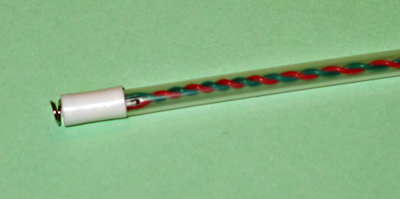
Many times doctors and nurses will inform you what procedure they will be performing on you and your child. What is supposed to happen is a conversation explaining the procedure followed by them asking for your consent. Many times medical professionals are very unprofessional; you will be told you need to undergo something, yet not told the risks or if its truly necessary. For example Foetal Scalp Electrode monitors; these monitors are often installed without consent or explanation. If you do not know what this is, its the “wire” they place in your vagina and attach to your unborn child’s head (and sometimes accidentally on the forehead or neck). Most do not know until after the fact that this device is screwed into the child’s head, yes; meaning a cut is created in order to monitor the heart rate rather than using an external belt monitor.
Image

To prevent unnecessary acts like this follow the advice of legendary Penny Simkin

Key Questions to Ask About Your Care

When a test is suggested:

  1. What is the reason for it? What problem are we looking for?
  2. What will it tell us? How accurate or reliable are the results?
  3. If the test detects a problem, what will happen next?
  4. If the test does not detect a problem, what will happen next?

When a treatment or interventional is suggested:

  1. What is the problem? Why is it a problem? How serious is it? How urgent is it that we begin treatment?
  2. Describe the treatment: How is it done? How likely is it to detect or solve the problem?
  3. If it does not succeed, what are the next steps?
  4. Are there risks or side effects to the treatment?
  5. Are there any alternatives (including waiting or doing nothing)?
  6. Ask questions 2, 3, and 4 about any alternatives.

*Photo from http://www.mybirth.com.au/intervention/fetal-monitoring.html
Cesarean Section Awareness Month

csec aware

The month of April is C-Section awareness month and I have been researching my head off about C-Sections. I will not provide statistics today being that I will lose self-control and post 2 million links, diagrams, and photos. Instead I will discuss the way they affect the women who undergo them, primary reason being, that’s what has touched me the most.

I have spoken to women who have received C-Sections and their stories just pull at the strings of my heart. None of these women wanted to be named, however, have given me permission to share their stories. After discussing/interviewing these women about their C-Sections I came to the consensus that their stories needed to be told. What I mean by this, is that the scars left were not physical but emotional and that they need to be addressed and tended to. Many women do not want/plan to have a C-Section, when they are told they going to have one it is usually after being told that they have failed at something or that either they or their unborn child’s life is at stake. So many of these woman were not told about “Gentle C-Sections”, having free arms and the ability to hold the baby after delivery. They are not told that is normal for heart rates to drop. They are not given the opportunity to progress at a natural rate. They are told that if they do not go through with the procedure, they will deliver a stillborn baby. So many of these woman are truly traumatized by their experiences. Many cannot watch clips, shows, videos, etc about Cesarean, it triggers their unresolved issues with their Cesarean.

Luckily VBAC (Vaginal Birth After Cesarean) awareness has been on the rise. Families are becoming informed that it’s quite safe to strive for a VBAC, they are discovering that they have rights in delivery rooms, and they are seeking out doctors who are willing to help them achieve a successful VBAC! The aspect of families yearning for a VBAC that I am not happy about, is the opposition. I have heard of doctors telling patients that if they attempt a VBAC “We will wheel you out of a room with pale gray lips and a dead baby resting on your chest.” Scare tactic statements are NOT OKAY, they are unethical and cruel. You have a right to attempt to achieve a VBAC. It hurts me to say this but sometimes you will have to fight tooth and nail to achieve your VBAC, you need to have a strong support group! Be prepared for nurses and doctors pressuring and scaring you out of your decision. Whatever they tell you, QUESTION THEM, I cannot stress it enough; find out why they want to do something and find out what they believe the statistics are. A birthday party, dinner, concert, vacation, or any engagement is NOT an excuse/cause for a C-Section! Stay strong, be positive, get educated, find support, attempt a VBAC.

Doulas

Image


The definition of a doula is a woman who is trained to assist another woman during childbirth and who may provide support to the family after the baby is born. The ancient greek meaning for the word doula means female slave, or a woman who serves.

A doula is someone, commonly a woman, who give emotional support throughout a woman and her family’s journey of becoming a parent. Doulas have been around since ancient times and help create birth plans, provide tactics for dealing with labor pains, assist or act as the birth partner, and can provide care to the new family after the birth has occurred. There are birth, postpartum, abortion, and bereavement doulas. Doulas come in a variety of forms, some act as a shield from the tech savvy medicinal world, others are silent supporters of the mother and partner. Either way, doulas are amazing; they are truly worth their weight in gold.

Image


As the graph indicates, the use of doulas is back on the rise and I am stoked about that! Now, lets discuss choosing a doula. The only time I have ever heard something bad about a relationship with a doula was a situation in which both parties went against their personal feelings that the match was unfit and worked together despite the fact. Which leads me to stress the importance of the interview. Both parties need to represent their true selves at the interview, and feel out each others vibes. If it feels right within, go for it! Now I have a question (as usual), do you find it necessary for a doula to be certified? Many are not informed on the fact that doulas do absolutely nothing medical. Everything learned in a certification is what one would learn in apprenticeship in my opinion. Certification simply gives clients and the doula a piece of mind that some type of training has occurred. My advice is to not disregard a doula who was not certified with an organization, doulas obtain knowledge through experience not classes.

Introducing children to Breastfeeding

I recently got into an argument with a friend over whether or not children should be introduced to breastfeeding, mainly addressing little girls. My god-daughter was not breastfed due to the fact that her mother was not producing milk. As a result, her mother never speaks about breast feeding. I just erased a sentance stating that the fact that she was never breastfed was niether here nor there, but I just realized thats a crucial part to the story.

When my god-daughter grows up and asks about her childhood, her mother will never tell her a story regarding her breastfeeding her beautiful baby. Therefore, the act of breastfeeding will not be a conversation had until school brings it up (if they ever do), its seen via person or TV, or until she is preparing to have a child of her own. Due to this reason I decided to teach Elizabeth about breastfeeding using her baby doll as an example. She now knows the biological purpose of breasts and occaisionally feeds her baby doll via imaginary breast milk.

When my dear friend found out about this, she went crazy! She said I was confusing Elizabeth, and that it was an unnecessary lesson. I counterargued that confusion only occurs when things like this aren’t discussed in a open setting within the family.